.
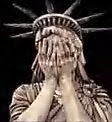
There will always be those who choose not to believe and are threatened by us who choose Christ. For those who choose not, I pray for their souls and for Christ to give them understanding!!!!!
Ask and it will be given to you; seek and you will find; knock and the door will be opened to you. For everyone who asks receives; he who seeks finds; and to him who knocks, the door will be opened."
(Matthew 7:7-8)
The Lord Prayer.
Our Father, which art in heaven
Hallowed be Thy name
Our Father, which art in heaven
Hallowed be Thy name
Thy kingdom come
Thy will be done
On earth as it is in heaven
Our Father, which art in heaven
Hallowed be Thy name
Hallowed be Thy name
Our father, which art in heaven
Our father
Hallowed be thy name
Hallowed be thy name
Thy kingdom come
Thy will be done
On earth as it is in heaven
Give us this day
Our daily bread
And forgive us our debts
As we forgive our debtors
And lead us not into temptation
But deliver us, deliver us from evil
Showing posts with label Americans. Show all posts
Showing posts with label Americans. Show all posts
Saturday, January 31, 2009
Wednesday, January 21, 2009
Patriot Act and the War on Civil Liberties.
A brief history of the Patriot Act, showing the many deceptions brought in by the Bush Administration, including: requesting total secrecy form public input and swapping at the last moment, the original Bill that Congress agreed to sign, with one manipulated by the Administration. The Administration's version of the Bill contained unconstitutional provisions that had been rejected earlier by Congress.
Regardless, Congress rushed to pass an, otherwise, unread Bill which sought to greatly expand all federal law enforcement powers -- far beyond their intended means. Hence, America would later discover that the Patriot Act had little, if anything, to do with fighting the actual "war on terror" and much more to do with bypassing the civil protections, granted under the US Constitution
Wednesday, March 26, 2008

Oklahoma Anti immigration bill will cost state 1.8 Billion in revenue.
New study estimates that Oklahoma's anti-immigration law will cause $1.8 billion in economic losses as foreign-born workers flee the state.
The projection is based on 50,000 workers, both documented and undocumented, leaving Oklahoma, causing a 1.3 percent reduction in the gross state product over the next few years.
The Oklahoma Bankers Association said it has no stand on the immigration measure, but commissioned the study after reports from banks of problems incurred by companies that employ immigrant workers.
One restaurant that had been making $5,000 payments to a bank each month closed its doors, construction projects have been delayed because of a lack of workers and farm workers have disappeared, banking officials said.
Oklahoma's House bill, written by Rep. Randy Terrill, R-Moore, took effect Nov. 1, preventing undocumented immigrants from obtaining driver's licenses and public services.
It criminalized transporting, concealing or harboring them, and eventually will require employers to check immigration status of prospective employees through an online federal program.
State lawmakers around the country are proposing hundreds of bills this year aimed at curbing Undocumented immigration, including lawmakers in at least eight states sponsoring legislation similar to Oklahoma's
While the OBA took no position on the Oklahoma measure's social policy, "bankers do have concerns about unintended consequences that have come as a result of the bill," said Don Abernathy, chairman of the association.
"That's the reason we decided to commission this study, to better understand the facts and get a better handle on the costs to the state's economy and to bank customers," he said.
The study, by the Economic Impact Group of Edmond, Okla., was based on Oklahoma having a total foreign-born population of 111,000 to 175,000, with an estimated 50,000 to 75,000 being undocumented workers, mainly from Mexico. The state has an overall population of 3.5 million.
According to officials who conducted the study, Oklahoma's economic losses will build over the next few years, before a slight recovery in the state gross product as new workers move into the state.
Officials said the study is consistent with similar analyses performed in Texas.
Hispanic leaders have estimated that more than 20,000 undocumented workers, mostly in the Tulsa area, fled the state ahead of the bill taking effect.
Terrill questioned the study's conclusions after a cursory review of it. He said his legislation was geared toward "an attrition through enforcement approach," with no mass exodus of undocumented workers expected.
He said, however, the intent of the bill was to have undocumented workers leave Oklahoma for other states and there is antidotal evidence that is happening. "We still have no hard numbers," he said.
Terrill called the report "one of the best reports that money can buy to take shots at (the) House bill."
"This debate is about a whole lot more than just economics," he said. "It is about defending the rule of law, it is about upholding our state and national sovereignty and it's also about the immorality of employing cheap, illegal labor."
The lawmaker said an anti-immigration group has estimated Oklahoma loses more than $200 million in state revenue through education, medical and other benefits paid to Undocumented workers and their families.
Terrill said the OBA report does not account for those benefits in projecting economic losses to the state.
The U.S. Chamber of Commerce has filed a federal lawsuit challenging the Oklahoma statute as interfering with federal immigration law.
Monday, March 24, 2008
Friday, February 22, 2008

Are Mexican Americans and Mexicans driving down wages?
Since when Mexican Americans, Mexicans has been treated equally to others; even African Americans has not being treated fairly regarding labor, wages, and benefits. Let's make a common sense and stop being ignorants to the equation of the problem. Equal Rights.
Or America forgot the depression of the World War II?
World War II marked another sharp reversal in the course of Mexican American history, renewing hope where the Depression had brought despair. The Depression had left in its wake a population decline, devastated communities, and shattered dreams; the war brought population growth, resurgent communities, and rising expectations.
World War II caused a tremendous labor shortage. When the military forces called for recruits, Mexican Americans responded in great number and went on to serve with distinction. Some 350,000 Mexican Americans served in the armed services and won 17 medals of honor. The war also brought industrial expansion, further aggravating the labor shortage caused by growth of the armed forces. Mexican Americans thus managed to gain entry to jobs and industries that had been virtually closed to them in the past. These new opportunities liberated many Mexican American from dependence on such traditional occupations as agriculture.
The turnaround from the labor surplus of the 1930s to the labor shortage of the 1940s had a special impact on agriculture and transportation. For help, the United States turned to Mexico, and in 1942 the two nations formulated the Bracero Program. From then until 1964, Mexican braceros were a regular part of the U.S. labor scene, reaching a peak of 450,000 workers in 1959. Most engaged in agriculture; they formed 26 percent of the nation's seasonal agricultural labor force in 1960.
Along with opportunities, World War II also brought increased tensions between Mexican Americans and law-enforcement agencies. Two events in Los Angeles brought this issue into focus. In the Sleepy Lagoon case of 1942-1943, 17 Chicano youths were convicted of charges ranging from assault to first-degree murder for the death of a Mexican American boy discovered on the outskirts of the city. Throughout the trial, the judge openly displayed bias against Mexican Americans, and allowed the prosecution to bring in racial factors. Further, the defendants were not permitted haircuts or changes of clothing. In 1944, the Sleepy Lagoon Defense Committee obtained a reversal of the convictions from the California District Court of Appeals, but the damage had been done. Los Angeles newspapers sensationalized the case and helped create an anti-Mexican atmosphere. Police harassed Chicano youth clubs, and repeatedly rounded up Chicano youth "under suspicion."
In the aftermath of the convictions and the press campaign, conflict broke out between U.S. servicemen in the area and young Mexican Americans who often dressed in the zoot suits popular during the wartime era. Soldiers and sailors declared open season on Chicanos, attacking them on the streets and even dragging them out of theaters and public vehicles. Instead of intervening to stop the attackers, military and local police moved in afterward and arrested the Chicano victims. Spurred on by sensational, anti-Mexican press coverage of the "zoot-suit riots," these assaults spread throughout Southern California and even into midwestern cities. A citizens' investigating committee appointed by the governor later reported that racial prejudice, discriminatory police practices, and inflammatory press coverage were among the principal causes of the riots. The Sleepy Lagoon case and the zoot-suit affair provided the basis for Luis Valdez's Zoot Suit, which in 1979 became the first Chicano play to appear on Broadway.
Despite such events as these, the World War II era proved to be generally positive for Mexican Americans and is often viewed as a watershed in their history. Progress continued after the war. The G.I. Bill of Rights gave all veterans such benefits as educational subsidies and loans for business and housing. Moreover, returning Mexican American servicemen refused to accept the discriminatory practices that had been the Chicanos' lot. The G.I. generation furnished much of the leadership for post-war Mexican American civil rights and political activism.
Veterans were instrumental in the founding and growth of a variety of Chicano organizations. Among the heavily political organizations, the Unity Leagues and the Community Service Organization registered voters in California and supported Chicano candidates. These groups also engaged in such diverse activities as language and citizenship education, court challenges against school segregation, and assistance in obtaining government services. Even more overtly political has been the Mexican American Political Association (MAPA).
Mexican American progress since World War II is reflected in occupational patterns. Changes in Mexican American job concentrations reflect to some extent changes in the state economy. Since 1940, California has experienced a manufacturing boom and rapid growth in such areas as government, product distribution, consumer-oriented activities, and professional services. Percentages of Mexican Americans in agriculture and unskilled labor positions have declined, while percentages in professional, technical, managerial, clerical, skilled craft, and semi-skilled occupations have risen.
The post-Depression era brought socio-economic gains for Mexican Americans, but not equality. Although percentages of Mexican Americans in professional, technical, managerial, and clerical positions have increased, they still fall far short of parity according to their population numbers. Moreover, in nearly every major occupational group, Chicanos tend to hold inferior jobs, and Chicano earnings in the same job classifications tend to be lower than those of Anglos.
Inequitable economic conditions are paralleled by comparatively low Chicano educational attainment and severe underrepresentation among elected officials. The latter has resulted partially because thousands of Mexican immigrants have lived in California for decades without obtaining U.S. citizenship. With Mexico so close, many come with plans ultimately to "return home," although these dreams often go unfulfilled. Some Mexican immigrants, although harboring no desire to live in Mexico.
Other factors have also contributed to Chicano electoral underrepresentation. In 1977, for example, a California legislative committee on elections partially attributed Chicanos' limited representation on most city councils in cities with significant Chicano populations to the predominant use of citywide at-large elections instead of district elections. There were no Chicano council members at all in 42 such cities in California. The committee argued that local at-large elections prevent "minority voters from exercising their potential political weight," since "their votes disappear in a sea of majority group votes." On the other hand, some contend that at-large elections make it less likely that candidates will write off minority votes as irrelevant, as can happen in ward-based contests.
When it comes to military service, combat decorations, and wartime casualties, however, Mexican Americans have been overrepresented in terms of population. Because of their lower educational attainment and restricted employment opportunities, Chicanos have traditionally viewed military service as a viable economic option. And since they were underrepresented in higher education, Mexican Americans did not benefit from student deferments as frequently as Anglos.
Finally, the 1970 U.S. Commission on Civil Rights report, Mexican- Americans and the Administration of justice in the Southwest, documented unequal treatment of Chicanos by law-enforcement agencies and the judicial system. Among widespread abuses cited in this and other studies are the lack of bilingual translators in court proceedings; underrepresentation of Chicanos on grand juries, as judges, and as law-enforcement officers; unequal assignment of punishment and probation to convicted Chicanos; excessive patrolling of Chicano barrios; anti-Mexican prejudice among police and judicial officials; and even wrongful use of law-enforcement agencies. In the search for undocumented Mexicans, the U.S. Border Patrol has exacerbated antipathy among Mexican Americans by periodic raids on houses, apartments, restaurants, and bars in Latino communities and predominantly Mexican American places of employment
Thursday, February 21, 2008

Why Millions of Legal and Undocumented Europeans were fleeing to America from 1830 to 1907?.
Millions of today's Americans the term 'Ellis Island' refers not so much to the island itself (a small and otherwise uninteresting island in New York harbour) as to the immigration station which opened there in 1892.
In the aftermath of the American Revolution there was a large influx of immigrants into the USA - perhaps as many as 5,000 people every year. But by the early 1900s there were 5,000 people arriving every day.
Immigration to the USA had begun to increase quite substantially during the 1830s, mostly from Ireland, Great Britain and Germany. Passengers simply disembarked at the wharves of Manhattan, New York. But as the immigrants kept arriving and their numbers were increasing, it was decided to establish a receiving centre for them.
This would have a dual purpose. It would be a screening centre, to filter out anyone arriving with a contagious disease and prevent them from entering the country. And it would act as a help centre for the new immigrants, particularly in respect of protection from the robberies, fraud and scams to which new arrivals were particularly vulnerable.
Castle Garden
The first centre for processing immigrants to the USA opened in 1855 at Castle Garden (since renamed Castle Clinton), administered by the authorities of New York State. But a remarkable piece of legislation, which had all sorts of far-reaching effects, affected immigration, too.
This was the Homestead Act, signed into law by Abraham Lincoln in 1862, under which private citizens were able to lay claim to a sizeable plot of land on payment of just a few dollars. This Act remained in force until 1976 (1986 in Alaska).
Free Land
The offer of virtually free land in the land of the free naturally attracted even more immigrants, especially, in the 1860s, from Scandinavia. Then in the 1870s large numbers of immigrants began to arrive from Italy, Russia and Austria-Hungary.
The 1870s also saw the first restrictions on immigration enacted by Congress.
Steamships
During the 1880s there was an exponential increase in immigration, as millions streamed in from all around the world. The advent of the steamship had reduced the journey time enormously.
During that decade some nine per cent of the entire population of Norway emigrated to the USA. Whole families arrived as a unit, but often a young man would come on his own to find work first. Some of them later sent for their family members to come and join them; others worked hard for a while before returning to their homeland with their savings.
Federal Immigration Centre
In 1890 the federal government took control of immigration in New York harbour, to the great annoyance of the State authorities, who retaliated by refusing to allow the government to use the immigration centre at Castle Garden. So the government set up a temporary processing centre at the Old Barge Office near the US Customs House at the south-eastern foot of Manhattan Island.
Then they set about converting a small island in the harbour, on which Fort Gibson stood, into the first US federal immigrant reception and processing centre. The island was Ellis Island.
The new centre on Ellis Island opened on 1 January, 1892. It was a timber building, three storeys high, designed to deal with up to 10,000 immigrants per day. The very first immigrant to be processed here was named Annie Moore, a 15-year-old girl from Ireland.
In 1897 a fire broke out. The whole structure burned to the ground, and all the administrative records for this five-year period were lost.
A new Ellis Island centre, costing $1 million, was built from brick and stone and steel. It was designed in the French Renaissance style and opened in December, 1900.
It dealt with 'steerage' passengers (those with the cheapest tickets). In its first full year of operation it processed 389,000 immigrants, peaking at more than one million in 1907 (including a record of over 11,000 immigrants in a single day).
First Class and Second Class passengers were dealt with quickly and conveniently on board ship, so did not need to pass through the Ellis Island centre.
Running the Gauntlet
At Ellis Island the immigrants entered the building and climbed the stairs up to the first floor, as doctors watched carefully for mobility problems, breathing difficulties or other signs and symptoms that suggested the need for further medical examination.
This must have been a nerve-racking time for these newcomers. Having endured so much hardship and having come such a long way, it would be terrible to be sent away at this stage, especially if that would mean a family group being broken up.
Although the statistics say that only one to two per cent were refused entry into the USA and sent back to their place of origin, that still means that something like a quarter of a million people had to suffer that fate.
Those who passed the medical were then interviewed and had to answer a long questionnaire about their origin, their destination, their education, skills and occupation (if any) and so on. After all the formalities they could start to look forward to a new life in the New World.
Roughly one-third stayed in New York City, the rest dispersed elsewhere.
The Melting-pot
In the early years of the 20th Century, immigrants of all nationalities and races were crowded together in the mean streets and tenements of Lower Manhattan. It is commonplace nowadays to hear New York City described as a melting-pot, but the term was first applied in this context by an Englishman in 1908. The playwright Israel Zangwill (1864 - 1926) wrote a play of that name, with this line:
America is God's Crucible, the great Melting-Pot where all the races of Europe are melting and re-forming!
- The Melting-Pot, Act I
Detention and Deportation
The First World War (1914 - 1918) considerably reduced immigration, and Ellis Island was used during this period as a detention centre for enemy aliens.
Then during the 1920s laws were passed restricting immigration. Quotas were introduced, based on national origin. Immigration processing tended to be carried out at consulates in the country of origin rather than on arrival in the USA. Ellis Island was used mainly as a deportation centre, as well as a coastguard station.
After World War II, during which Japanese, Italian and German aliens were interned there, Ellis Island finally closed down in 1954. The main building was later restored, and in 1990 opened to the public as an Immigration Museum.
Why They Came
It is estimated that at the start of the 21st Century there are more than 100 million Americans whose ancestors came through Ellis Island. That is about one in three of all Americans.
Some of these ancestors were fleeing hunger and starvation. Some were escaping from religious or political persecution. Some were looking for an alternative to unemployment and poverty. Some came simply to join family members already in the USA.
Others relished the wide open spaces, the availability of land, or simply the attraction of making a new life for themselves in a land of opportunity. Yet others came looking for gold.
As President JF Kennedy wrote in A Nation of Immigrants, 'There are probably as many reasons for coming to America as there were people who came'
Friday, February 15, 2008

Whoever tied the noose and hung it on his door knob was not ignorant of the symbol's meaning.
Unadilla Valley Central School officials have identified two students they believe are responsible for hanging a noose on a counselor's door last week.
School Superintendent Robert Mackey said Wednesday the students are being disciplined, but he would not release any specific information about who the students are or what disciplinary actions were being taken.
"I can tell you that the consequences will match the offensiveness of the act," Mackey said.
The students have not been attending school since they were identified, he said.
The noose tied from clothesline-type rope was found the morning of Feb. 6 on the door of the Liberty Partnership Program counselor's room while school was in session, troopers previously said.
The counselor was identified by the school as Mark Montgomery, who is black. He has been at the school for 11/2 years.
The incident remains under investigation by Norwich state police. Troopers on Wednesday said they were hoping to have closure in the case by Friday, but they would not indicate if that closure would involve criminal charges.
There are no other students involved, Mackey said.
"We are sure that this is it," Mackey said.
Mackey said school staff had heard from other students that the two suspected of hanging the noose may have learned how to tie it by watching a video on YouTube, the popular Internet video-sharing website.
Mackey said he couldn't speculate on a motive.
"We can't answer specifically what was going through the minds of the kids," Mackey said. "Many teenagers really act without ever thinking about the end result.
The school resource officer _ a state trooper _ was a huge help in bringing the incident to a quick resolution, Mackey said.
State police Bureau of Criminal Investigation officers were in the school within a few hours of the noose being found, he said.
Students began coming forward Sunday with information about who hung the noose, and by Tuesday, both students who participated were identified, Mackey said.
School officials are treating this as an isolated incident, he said, but as the school deals with the incident's aftermath, staff will be trying to gauge the depth of any racist sentiment that might exist at the school.
The school is planning an assembly for older elementary, middle and high school students after winter break next week, Mackey said.
Teachers will then "circle the desks" and talk with the students in a classroom setting about issues surrounding race and the noose incident.
"We're working on that phase now," Mackey said.
If there appears to be a need for a longer-term approach to any race or discrimination issues at the school, the district my opt to start an Alternatives to Violence program or participate in a course of study through Project Reach, which focuses on respecting ethnic and cultural heritage, Mackey said.
Ultimately, the noose incident could be an opportunity to educate students, he said.
"Our main goal is to facilitate learning every day," Mackey said.
Montgomery, a resident of Clayville in Oneida County, said Monday night he works with at-risk youth in his role with the Liberty Partnership program, which has a goal of reducing drop-out rates.
"I have sadly been exposed to racism my entire life," Montgomery said, but the hanging of a noose brought it to a new level.
Noose displays have garnered national media attention in recent months.
In late January, a federal grand jury indicted an 18-year-old Louisiana man on hate crime and conspiracy charges for allegedly fashioning nooses with a 16-year-old that were then displayed toward marchers traveling from a civil-rights rally in September.
Earlier in January, the editor of Golfweek magazine was fired for using a noose on the magazine's cover to illustrate coverage of controversy over comments regarding lynching and Tiger Woods made by a Golf Channel broadcaster.
President Bush spoke about the symbolism of the noose during an event Tuesday marking African-American History Month.
"The noose is not a symbol of prairie justice, but of gross injustice," Bush said. "Displaying one is not a harmless prank. Lynching is not a word to be mentioned in jest."
Montgomery said that whoever tied the noose and hung it on his door knob was not ignorant of the symbol's meaning
Saturday, February 09, 2008

Minorities say subtle racism remains, bias shows daily.
LEWISTON (AP) - Minorities in the area say several recent incidents of hate crimes show racial insensitivity still remains.They say American Indians, blacks and whites still put up walls because of ignorance or insensitivity.
Wendy Diessner of the Lewiston-Clarkston YWCA, which serves as a clearinghouse, says her agency fields about 10 complaints a year of racism that aren't felony malicious harassment.
37-year-old Jeanette Weaskus is the daughter of a white mother and a Nez Perce father. She studies race issues as a Washington State University doctoral student. She says many people believe they are good, but can be subtly racist.
Dean Davis, who is black, says racism is discrete. He says the recent case of a mother and daughter shouting "white power" during a fight with an American Indian teenage girl shows progress is slow to come.
Alan Marshall, a Nez Perce social scientist and professor at Lewis-Clark State College, says people of European ancestry may unintentionally say or do things that hurt American Indians. He says the frequency of racially charged incidents has declined as tribal influence has grown in the last three decades
Thursday, January 31, 2008

Somewhere in America..................Every hours someone commits a hate crime.
Every day at least eight blacks, three whites, three gays, three Jews and two Latinos become hate crime victims. Every week a cross is burned.
Hate in America is a dreadful, daily constant. The dragging death of a black man in Jasper, Texas; the crucifixion of a gay man in Laramie, Wyo.; and post-9.11 hate crimes against hundreds of Arab Americans, Muslim Americans and Sikhs are not "isolated incidents." They are eruptions of a nation's intolerance.
Bias is a human condition, and American history is rife with prejudice against groups and individuals because of their race, religion, disability, sexual orientation or other differences. The 20th century saw major progress in outlawing discrimination, and most Americans today support integrated schools and neighborhoods. But stereotypes and unequal treatment persist, an atmosphere often exploited by hate groups.
When bias motivates an unlawful act, it is considered a hate crime. Race and religion inspire most hate crimes, but hate today wears many faces. Bias incidents (eruptions of hate where no crime is committed) also tear communities apart — and threaten to escalate into actual crimes.
According to FBI statistics, the greatest growth in hate crimes in recent years is against Asian Americans and the gay and lesbian community. Once considered a Southern phenomenon, today most hate crimes are reported in the North and West.
And these numbers are just the tip of the iceberg. Law enforcement officials acknowledge that hate crimes — similar to rape and family violence crimes — go under-reported, with many victims reluctant to go to the police, and some police agencies not fully trained in recognizing or investigating hate crimes.
The good news is ...All over the country people are fighting hate, standing up to promote tolerance and inclusion. More often than not, when hate flares up, good people rise up against it — often in greater numbers and with stronger voices.
This guide sets out 10 principles for fighting hate, along with a collection of inspiring stories of people who worked to push hate out of their communities.
Whether you need a crash course to deal with an upcoming white-power rally, a primer on the media or a long-range plan to promote tolerance in your community, you will find practical advice, timely examples and helpful resources in this guide. The steps outlined here have been tested in scores of communities across the nation by a wide range of human rights, faith and civic organizations.
Our experience shows that one person, acting from conscience and love, is able to neutralize bigotry. Imagine, then, what an entire community, working together, might do.
1). ACT: Do something. In the face of hatred, apathy will be interpreted as acceptance by the perpetrators, public and worse, the victims. Decent people must take action; if we don’t, hate persists.
2). UNITE: Call a friend or co-worker. Organize allies from churches, schools, clubs and other civic groups. Create a diverse coalition. Include children, police and the media. Gather ideas from everyone, and get everyone involved.
3). SUPPORT THE VICTIMS: Hate-crime victims are especially vulnerable, fearful and alone. If you’re a victim, report every incident - in detail -and ask for help. If you learn about a hate-crime victim in your community, show support. Let victims know you care. Surround them with comfort and protection.
4). DO YOUR HOMEWORK: An informed campaign improves its effectiveness. Determine if a hate group is involved, and research its symbols and agenda. Understand the difference between a hate crime and a bias incident.
5). CREATE AN ALTERNATIVE: Do not attend a hate rally. Find another outlet for anger and frustration and for peoples’ desire to do something. Hold a unity rally or parade to draw media attention away from hate.
6). SPEAK UP: Hate must be exposed and denounced. Help news organizations achieve balance and depth. Do not debate hate-group members in conflict-driven forums. Instead, speak up in ways that draw attention away from hate, toward unity.
7). LOBBY LEADERS: Elected officials and other community leaders can be important allies in the fight against hate. But some must overcome reluctance - and others, their own biases - before they’re able to take a stand.
8). LOOK LONG RANGE: Promote tolerance and address bias before another hate crime can occur. Expand your community’s comfort zones so you can learn and live together.
9). TEACH TOLERANCE: Bias is learned early, usually at home. Schools can offer lessons of tolerance and acceptance. Sponsor an "I Have a Dream" contest. Reach out to young people who may be susceptible to hate-group propaganda and prejudice.
10). DIG DEEPER: Look inside yourself for prejudices and stereotypes. Build your own cultural competency, then keep working to expose discrimination wherever it happens - in housing, employment, education and more.
Subscribe to:
Posts (Atom)